


Closures, Openings and a Changing City
Nashville’s restaurant scene has always been lively, but lately, changes seem to come faster. In recent months, many well-known spots have closed, while new and ambitious restaurants keep popping up. From a construction and development perspective, this turnover reveals something bigger.
What’s happening in Nashville’s restaurants shows changes in how the city grows, how projects get financed, and how spaces are designed to keep up with the city.
A Faster Cycle Than Ever Before
Restaurants are turning over more quickly than they did even a decade ago. We’re seeing more second-generation restaurant spaces, where one concept closes and another quickly takes its place. That means shorter timelines and faster buildouts.
For owners, speed-to-market has become critical. For construction teams, this means more precise scheduling and faster permit approvals. Spotting potential issues before they cause delays has also become key for moving quickly.
Rising Costs are Shifting the Balance
Prices for materials and labor shortages are putting extra strain on restaurant projects. Meanwhile, rising rents push owners to rethink what they build and where.
More concepts are choosing smaller spaces and simpler kitchens. Owners are turning towards layouts that make the most of every square foot. Every decision, from how many seats to place to how the kitchen flows, is now viewed through both operational and financial angles. That’s why early budgeting and close collaboration between developers, operators, designers and builders have become essential.
Designing for Experience and Year-Round Use
In restaurant design, flexibility doesn’t typically mean constantly reconfiguring spaces like it might in an office setting. Instead, we’re seeing a strong emphasis on creating open, connected environments that enhance the guest experience. Many concepts are incorporating large glass overhead doors or operable window systems that allow the space to open up to the outdoors.
While these features are highly appealing, they also introduce challenges—especially in a climate like Nashville’s, with hot, humid summers and colder winters. Designing these spaces requires careful coordination to manage heating and cooling loads while still maintaining a comfortable environment for guests.
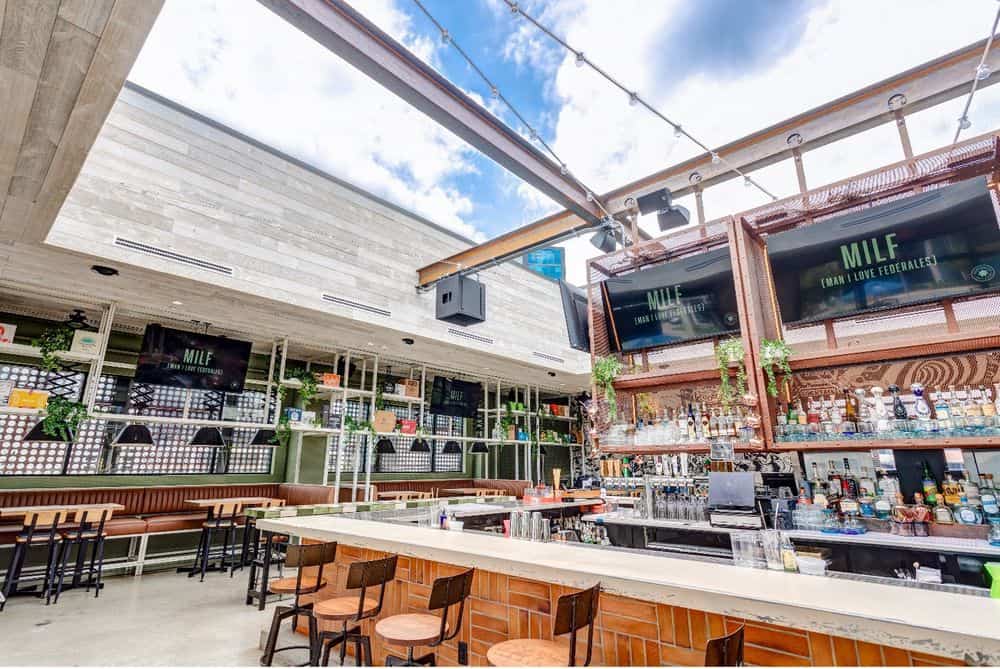
Outdoor patios remain a major draw, but owners are increasingly looking for ways to maximize their use throughout the year. Enclosing patios or designing them to be at least partially conditioned allows restaurants to retain valuable seating even when the weather isn’t ideal. In some cases, projects take it a step further—like Federales, where we incorporated a retractable roof system to create an open-air experience when conditions allow, while still maintaining control over the environment when needed.
Within the interior, flexibility tends to show up in more targeted ways, such as private dining areas or sections that can be closed off for events. Ultimately, the goal is not constant reconfiguration, but creating spaces that are comfortable, functional, and capable of performing well across a variety of conditions.
Closures Are Creating New Opportunities
Though closures grab attention, they also open doors. Empty restaurant spaces become valuable for new owners, especially in popular neighborhoods across Nashville. Turning an existing restaurant space into another restaurant concept can often be quicker and cheaper than building from scratch.
A City Expanding Beyond Its Core
Nashville’s growth isn’t just focused in a few areas anymore. As new residential and mixed-use developments expand farther out of the city, restaurants are moving there too. There is more activity in new neighborhoods where demand is growing alongside housing and commercial projects. For developers and restaurant owners, this creates new opportunities but also calls for careful planning to ensure their concept suits the area. Construction plays an important role by providing the right kind of space, in the right location and delivered on time.
What This Means Going Forward
Nashville’s restaurant turnover reflects a city still trying to balance growth and its identity. For developers and operators, success depends on making smart decisions early on, whether it’s budgeting or choosing locations. For design and construction teams, it means building projects that are efficient, mindful of costs and flexible enough to adjust as the market evolves. In a city changing so quickly, the most successful spaces won’t just meet current demands; they’ll be prepared for what lies ahead.